Thursday, 28 June 2012

Little Swift

Sunday 24th June 2012

Negative news (or lack of news, many birders probably otherwise engaged with Euro 2012) on Saturday night meant prospects of catching up with the New Brighton Little Swift on Sunday looked uncertain.

Martyn and I hatched a plan with options; a fairly early start (6.00am) to the day in Staffs with a strategic exit route up to Merseyside via the M6 should news of the Little Swift break.

We began at Gailey. Every time I’ve been there lately it tends to pee it down and this was no exception to that rule. Some Swift movement going on with 100+ and also smaller numbers of House Martin. Also 5 x Common Tern, Pochard, Little Grebe, Reed Bunting and a Blackcap (h).

A walk across the causeway then resulted in a major soaking. Negative news on the Swift received. Change of tack, Blithfield. There, we would find refuge from the rain at least, until it cleared.

Sitting in the hide at Tad Bay we noticed an unusually large number of Common Terns for this time of the year, 31 in this bay alone. Many of these possibly failed breeders, the high water levels this year no doubt resulting in a disappointing breeding year for many of our common species. Also 2 Oystercatcher, Shoveler and again a huge number of Swifts. Talking of Swifts, Martyn then received a pager message regarding the Little Swift. It was back and we were headed Scouseside.

The drive north went smoothly, but I was worried by messages of no news. In just under two hours we were in New Brighton and by this time the birders present had managed to relocate the Little Swift above the residential streets around St George’s Mount.

Although it wasn’t on view upon our arrival we didn’t have long to wait. There was a number of Common Swifts doing a feeding circuit and the Little Swift would appear every 10-15 minutes or so.

It was a very distinctive bird and could be picked out from the Common Swift with ease once you had got your eye in. Aside from the extensive white rump (which could only be seen in the right light) the bird was different from Common Swift in a number of ways. The easiest way to pick it out was by its tail, which was short and square-edged. Its flight was a little more fluttery than Swift too.

I found this bird an absolute joy to observe and we only took a short Morrison’s sarnie break for lunch then went back for seconds rather than moving on. A friendly and well-behaved twitch too, well apart from a few cobra-drinkers on a street corner. Genuinely interested and friendly locals here too. This was the second time I've twitched a rare Swift in Merseyside, the first being the Pallid Swift just across the river at Seaforth in 2009.


Images of Little Swift - courtesy of Martyn Yapp

Also during our visit we noted (of course) many Common Swift, House Martin, 2 Curlew over and Blackcap (h). A very brief stop along the front and we saw Ringed Plover, 5 Turnstone, Linnet and many Terns out at sea.

On a sad note, a very poorly seal was on the front and had attracted the attention of members of the public, some who were stroking it and thought it was just sleeping and would be fine. I'm sorry to tell you this but...

Tuesday, 26 June 2012

A few jars

Wednesday 20th June

An annual summer staple of birding in the West Midlands is a nocturnal visit to Cannock Chase. This usually yields stuff like Nightjar and Woodcock, although you have to be careful - it can be a little hairy up there of an evening, you may bump into ex-footballers and other social degenerates who enjoy loitering in car parks.

Making the most of a rare dry and still evening I headed up the Chase with Martyn. We were early so we had a saunter down to Stepping Stones to see if Pied Flycatchers were around. We could not find any but we did come across a very vocal and mobile Redstart. Also 2 Green Woodpecker and flocking Long-tailed Tits including many juvs by Coppice Hill car park.

Moving on to an area with a reputation for Nightjar, we got into position way before dusk. Whilst waiting we had a Hobby and Kestrel over and warblers such as Willow Warbler, Garden Warbler and Whitethroat gave occasional bursts of song.

Our first churring Nightjar was heard at a surprising 9:15pm. It was of course still almost fully light so we still had a while to go before seeing one. Eventually they appeared around the 10.00pm mark. From then until it got too dark to see, we observed at least 3 separate birds, two of them males. All birds were fairly active and showed in flight off and on. The spine-tingling sound of churring on the Chase is something not to be missed. Also a Woodcock came over a couple of times calling.

Sorry no images, it was a bit dark.

Monday, 25 June 2012

16th & 17th June 2012

This blog is in serious danger of becoming a twitching diary. It was therefore time for some long overdue regional birding. Martyn had just returned from a fortnight’s birding holiday in Turkey so a Staffs day out was planned; beginning at Aqualate Mere, we would move on to Blithfield and then take in the usual GPs on the way home.


Saturday 16th June 2012

A female Marsh Harrier was hunting the reedbeds upon our arrival and had certainly been present for a few weeks. Quite a surprise and very nice to see in Staffs. Also here Cuckoo, Willow Tit, Yellowhammer, Willow Warbler, Sedge Warbler, Whitethroat, 2 Great Spotted Woodpecker and 2 Buzzard. There were a massive number of Swifts and hirundines here, numbering 100’s of birds.

Marsh Harrier - image courtesy of Martyn Yapp

It was a bit of a windy wet day really and the Turtle Doves could not even be heard purring let alone be seen. I engaged in a little feeder fodder photography before we moved on.

Great Spotted Woodpecker

Great Tit

We then checked out Coley Marsh. It looked like the sort of place that could do a passage wader or two, but today it was quiet. A few pairs of Black-headed Gulls were nesting, also here Gadwall, Little Grebe, Stock Dove and Lesser Black-backed Gull.

Sandwiches scoffed at Blithfield, we were poised ready to put in a few hours here, however we were rudely interrupted by news of a Red-backed Shrike at Black Bank, North Staffs. Blithers cast asunder and we were soon heading north towards a Staffs mega.

This fine female Red-backed Shrike showed well along barbed wire, busily feeding on bees and beetles. Not close, but fine for good scope views. Here we saw lots of familiar faces, glad so many could make it being as the bird only ended up staying one day.

Staffs Mega - Red-backed Shrike - image courstesy of Martyn Yapp

On the way home we checked into Gailey where there were again notably large numbers of Swift and House Martin and 16 Common Tern.


 Sunday 17th June

Some urban birding in the morning resulted in watching a Peregrine flying and calling around the BT Tower. Peregrines are a regular feature of Birmingham's skyscape these days and I have seen them in the centre quite a few times this year. Across the city at another site there are a pair of Kestrels.

Brummygrine - image courtesty of Martyn Yapp

Much later that day I was in Herts to see the female Little Bittern that had been showing very well along the river at Stockers Lake. This was my second Little Bittern, however my first one was brief flight views of a male at Shapwick Heath in 2009. I’m never truly happy with a bird till I get to see one properly, so I was keen to see this bird.

Little Bittern did not disappoint. After a brief wait whilst the bird skulked, she eventually came out into the open fishing and sometimes climbing up on the reeds and branches. Gorgeous warm brown colouration, breast-streaking, pale brown wing patch and a dark crown showed that this bird is quite different from the male but equally striking.

Little Bittern - with now slightly less topical Euro 2012 football


Little Bittern - image courtesy Mark Rayment

Also here Red Kite, Sparrowhawk, Common Tern , Reed Bunting, Whitethroat and Pochard. Butterflies seem few and far between lately but an Orange-Tip was noted along with a few damselflys - Banded Damoiselle, Common Blue and Blue-tailed Damselfly.

Monday, 18 June 2012

East Yorks

Sunday 3rd June 2012

Two things I can’t abide; royalists and mindless patriotism. The only saving grace of the Jubilee Weekend was an extra couple of days birding granted kindly by our lovely Queen. East Yorks was the destination.

I was keen to all avoid media coverage as far as was humanly possible. This was pretty much achieved apart from encountering a Jubilee special edition of the Daily Fail in a McDonalds and some commemorative tat being sold in the shop at RSPB Bempton Cliffs. There was also bunting there. Sadly, not an Ortolan or anything like that.

Aldbrough

Arriving mid-afternoon sadly did not allow time for a full day in the field, however I was very keen to see the Roller that had been at Aldbrough since 31st May, following initial sightings at Kilnsea and Spurn.

This superb adult Roller was still present, feeding in the ploughed roadside field and returning to its favoured post regularly, where it was often mobbed by meadow pipits. The colours on this bird were absolutely breathtaking and it looked at its most stunning when it was in flight. Despite the miserable weather the bird seemed to be feeding very well.

Roller - image courtesy of Mark Rayment

 Blacktoft Sands

A Marsh Warbler had been singing here in recent days and we decided to have a go for this next. This however turned out to be a mistake as it was now raining heavily. Attempted to wait it out, but with the weather not getting any dryer we reluctantly decided to return in the morning.


Monday 4th June 2012

Next morning an entirely different story at Blacktoft. Along with other warblers this reedbed was now alive with singing warblers including sporadic song of Marsh Warbler, something I had not heard before. This is much more varied than Reed Warbler song and can contain a lot of mimicry. The Marsh Warbler occasionally sang from visible perches, views were very good allowing to observe the subtle differences from Reed Warbler including a slightly shorter bill, a more uniform brown rump and pale edging to the primary tips, which in this case was quite subtle.


Marsh Warbler - above images courtesy Mark Rayment

Also noted at Blacktoft – Reed Warbler, Sedge Warbler, Whitethroat feeding young, Tree Sparrows including juvenile birds, Avocet, Common Tern and Reed Bunting.


Flamborough Head

An adult male Red-backed Shrike was entertaining the crowds near the car park/lighthouse area. We watched this for a while then had a walk down to the plantation. It was a little quiet however 3 Lesser Whitethroat were noted, Corn Bunting (heard) and there was a lot of Gannet and Auk activity out at sea. A Painted Lady butterfly was noted.


Bempton Cliffs

I had never actually visited Bempton before and apart from the annoyingly large crowds of people I was really impressed. The seabird colony was much larger than I had expected with Gannets spilling out on to the top of the cliffs. Gannets hanging in the wind, trying to land could even be captured by my little Lumix.


Gannet flight path

 Also here, rather unexpectedly a Bonxie high over the seabird colony, around 6 Puffin, 1000’s of Guillemots, Razorbill, Fulmar, Kittiwake, Herring Gull and more young Tree Sparrows.

Kittiwake

Tree Sparrows

 Tuesday 5th June 2012

Frampton Marsh RSPB

The journey home was via Lincolnshire, stopping in at Frampton. There’s always usually something to see here and this was no exception. I noted a drake Garganey from 360 Hide and there was also a lot of wader action, particularly from the North Hide; a single Curlew Sandpiper moulting into sum plum, a Little Stint, 3 Sanderling, c20 Dunlin and c50 Ringed Plover. A few LRP were from 360 and other birds noted around the reserve included Avocet, Reed Bunting, Sedge & Reed Warbler and Tree Sparrow.

Saturday, 2 June 2012

Portland - The Best Bits

Recently enjoyed a holiday at Portland Bird Observatory, commencing on 19th May. I had a feeling it was set to be a good week upon finding a Black Redstart at the M.O.D. shortly after arrival. Here are the best bits from the trip...

Spotted Flycatchers and Garden Warbler were regulars in the Obs garden, a female Common Redstart was noted at the bill, a lone Wheatear lingered at East Cliffs and other migrants such as Willow and Reed Warbler continued to filter through. Stonechats with young were noted. Peregrine, Raven, Rock Pipit, Little Owl are all regular on the island, with stuff like Gannet, Manx Shearwater, Gullemot, Razorbill etc at sea.

All very nice, however things hotted up considerably with news of a singing Great Reed Warbler at Radipole on 22nd. The bird was elusive during the morning, but as hoped this sizable Acro was in full song again by early evening. Scope views were immense. Lifer #290. Also here some extremely showy Cetti’s Warblers, Bearded Tit and Lesser Whitethroat.

Monster Acro!

Weds 23rd was a most memorable day with a self-found Woodchat Shrike, on the hill opposite the Obs. Very excited to stumble across this bird, my best find thus far and only the second Woodchat I’ve ever seen. The bird stayed in these fields for the rest of the day and was enjoyed by many, including the notorious LGRE.


Woodchat Shrike - both images courtesy of Mark Rayment

4 White Storks also put in an appearance that day. The Obs received a phonecall from Radipole to report them heading our way and within 10 minutes they were over the Obs and out to sea around 12:18. However, they must have had second thoughts on a channel crossing as they returned within 20 minutes heading north back towards Weymouth. A Short-eared Owl was also seen that evening.

4 White Storks - nice to see you again!
Image by Mark Rayment


Lifer #291 – Portland Warden Martin Cade caught an Icterine Warbler on 24th. I saw and photographed the bird in the hand and saw it released. Not sure I feel comfortable ticking in the hand, but amazing to see it like this nontheless.

Icky in the hand

Also trapped by Martin, Willow Warbler & Chiffy - not similar mantle colour
Image by Mark Rayment

Later that day a visit to Lodmoor RSPB provided a Black-winged Stilt, although it was rather distant. Much better though, was getting excellent views of a Roseate Tern, rosy glow showing nicely in late afternoon sunlight. Only the second I’ve seen and the previous was one was in flight 4 years ago. Not a lifer, but felt like one. Also here 3 Dunlin, Marsh Harrier, Cuckoo (h), Little Egret and Oystercatchers with a chick.

Roseate Tern

Ferrybridge is another good place to visit: protected Little Tern colony and waders on the estuary. Ringed Plover, 3 sum plum Grey Plover, Dunlin, 2 Sanderling and 2 Bar-tailed Godwit were noted on our visit on 25th.

As well as birds some interesting insects were noted during the trip. Most notable was a visit to Cerne Giant Hill - the hillside was alive with thousands of Marsh Fritillary, Grizzelled and Dingy Skipper and Common Blue - a sight just as incredible as the giant himself.

Cerne Giant Hill

Marsh Frit - Butterfly Lifer


Broad-bodied Chaser - common in Obs garden

I would highly recommend Portland Observatory as a fantastic place to stay for any birders visiting Dorset. It is clean and cosy and the facilities are very good. Very affordable too at £15 per night for members. Many thanks to Warden Martin Cade, who made us feel very welcome indeed.

Wednesday, 16 May 2012

Norfolk Post

Hmm....a fair possibility of catching up with rarities such as Purple Heron and Pallid Harrier and a very good chance of meeting with a Red-rumped Swallow? Bank holiday? Norfolk? Don’t mind if I do!

Sunday 6th May – Holkham

'Showing well' is not an expression usually associated with Purple Heron, but that was the news yesterday from Joe Jordan Hide. We arrived mid-afternoon. No further reports of this bird but it was still worth a look; no negative news either and slow bird news in Norfolk is hardly unusual.

Sadly the Purple Heron did not show and there were no subsequent reports, clearly it had moved on.  It was interesting to learn however, that the heron had already been present several days prior to being reported.

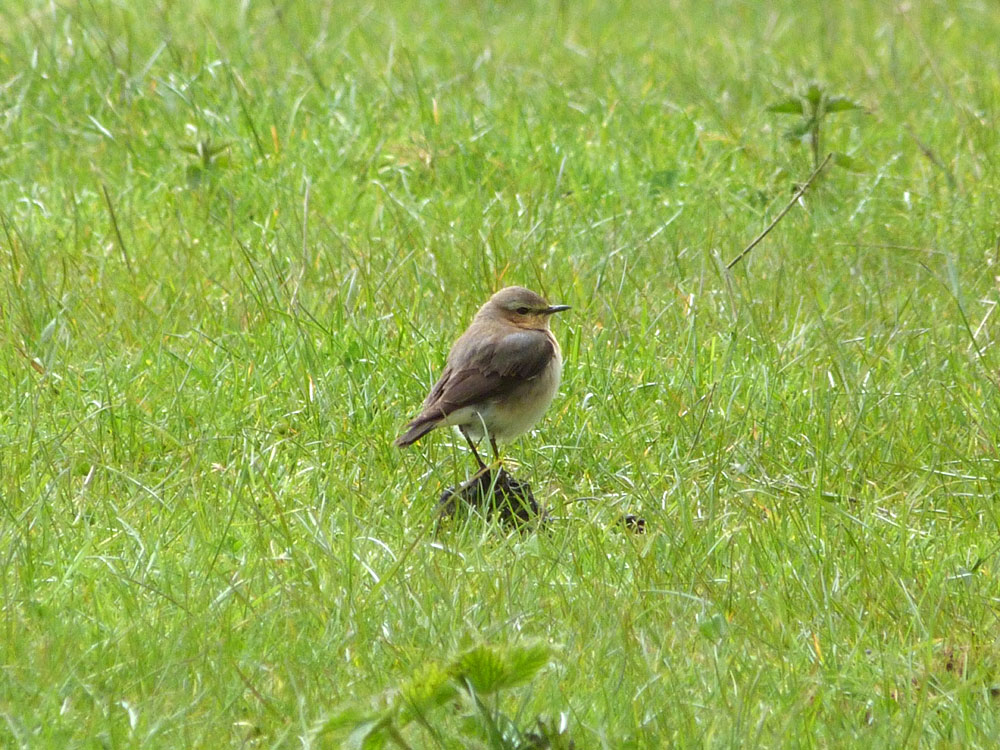
Holkham anyway, always worth a visit. 6 Whimbrel were in a field from Lady Anne's Drive, also noted 2 reeling Gropper, 2 Spoonbill, 10 Little Egret and 4 Grey Partridge. The escaped Sacred Ibis was present. 2 Wheatear were in the dunes. 6 Marsh Harrier, single Barn and Short-eared Owl were noted.


Monday 7th May

Blakeney

A pre-breakfast amble around the gorse and shrubs of Friary Hills produced 5 Lesser Whitethroat, Common Whitethroat, Sedge, Blackcap, Chiffy and Willow Warbler. A Whimbrel and Black-tailed Godwits were in the fields.


Salthouse

Full-English now lining the stomachs it was on to Salty. Here we had 16 Whimbrel, 2 Stonechat (m&f), 7 Wheatear and Willow Warbler. Hirundines were coming in off the sea, mainly Swallows (no Red-Rumped!).


Kelling Water Meadows

Highlights from the gate were a Whinchat, 3 Yellow Wagtail and a couple of Wheatear. Lots of Whitethroat and Blackcap along the hedgerows.


Cley Marshes NWT

Some time was spent here in the hides overlooking Pat’s Pool. A Temmincks Stint was the best bird here by far. Numbers of other waders were low -1 Ringed Plover, 2 LRP, 1 Dunlin, 4 Common Sandpiper. Also present 2 Wheatear, a single 1st-summer Little gull and 4 White Wagtail. A Bearded Tit was showing well on the boardwalk for one lucky photographer.

We then stopped at the Eye Field to have a look at a Channel Wagtail which was with 3 Yellow Wags. These birds were all very close to the car park.

Channel Wagtail
Channel Wagtail
Standard Yellow Wagtail

The Channel Wag was a stunning little thing, subtly different than the usual Blue-headed types often seen in spring. Very nice indeed.


Holme

Holme seemed like a good place for looking for raptors etc. Unfortuntely by the time we got there it was by no means raptor weather (ie rather wet). It was also rather dead here. 2 Whimbrel, 1 Marsh Harrier, Whitethroat, Redshank, Curlew and Black-tailed Godwit was about all we could muster.


Grafham Water, Cambs

We had already started the journey homewards when news came of a Red-rumped Swallow at Grafham Water. Arrived there about 6.45pm and it was looking challenging to say the least, as we attempted to scan distant flocks of hirundines out in the middle of the res, in inclement conditions.

Despite continued soakings, wet optics and specs I held out hope that the bird would perhaps return to the trees around the car park where it had been earlier and in fact just prior to our arrival. The weather did eventually let up and Swallows began to return to this area....it wasn’t long before the faboulous Red-rumped Swallow reappeared. I got some very good flight views of the bird, these were fairly brief but enough to note all the salient features.

Alas I did not see it on the deck, as illustrated in images by Mark Hawkes below. It lingered for a few days after my visit and would frequently rest on the dam. A cracking little bird all the same.

Red-rumped Swallow - many thanks to Mark Hawkes for the use of these images
Lifer 289.

Monday, 14 May 2012

Regional Catch-Up

Saturday 5th and Sunday 13th May were spent birding Staffs with the Regional Tick. This was interspersed with a brief visit to Norfolk and yet another life bird, however more of that later...

Saturday 5th May

A slightly later than usual start with Martyn and I arriving around 8:15am at the inner city Bird Obs. It was dead; very early is best for urban birding. A Grey Heron flew over and Lesser Black-backed Gulls came very close, a daily sight for Brum dwellers, with 555 pairs now breeding in the City and 31 confirmed breeding pairs of Herring Gull.*

*SOURCE – Jim Winsper’s survey - Roof-top nesting gulls in the Birmingham area

It was already noisy and difficult to hear any birdsong, so we headed northwards into Staffs.


Croxall GP

Two Hobby overhead and a showy Garden Warbler provided welcome year ticks. Also noted 3 Whitethroat, 3 Sedge Warbler and an elusive Reed Warbler. Around the pool - 6 Oystercatcher, 2 Common Tern, 6 Teal, a Shelduck over and many hirundines. Disappointingly the water was very high, meaning wader-passage is none existent.

Sedge Warbler - Image courtesy of Martyn Yapp - http://www.theregionaltick.blogspot.co.uk/
Swift - Image Courtesy of Martyn Yapp - http://www.theregionaltick.blogspot.co.uk/


Whitemoor Haye

Mass hirundine action in progress. This attracted the attentions of 3 Hobby, which flushed all the hirundines. 


We tried our best, but none of the Swallows had red rumps. There was also some Tern action however these were 12 plain old Common.

3 Common Sandpiper, 1 Redshank, 1 Oystercatcher. Also a pair of Lapwing were noted to have young. Yellowhammer and Tree Sparrow present.


Blithfield Reservoir

A single Black Tern fed around the causeway and the mouth of Tad Bay. Great to catch up with, a bird I managed to miss the last couple of years. A mind-boggling number of hirundines were here, with probably a 1000 of both Swallow and Swift. Yet another Hobby was noted.

Around 5 Yellow Wagtails near the Causeway and another 10+ by Beechtree Point, along with a White Wagtail.

Waders, again foiled by very high waters but 3 Common Sand and 5 LRP were on the causeway. A Whimbrel was heard. 2 Goldeneye were in Blith Bay, with 5 more in Tad. Also in Tad Bay, was Richard Powell, reaching the latter stages of his big Staffs bird race day.

Our visit concluded with watching 3 Common Scoter (2 drakes & 1 female) in St.Stephens Bay, always an intriguing sight on a midlands res.


Sunday 13th May

Good news....


Cuckoo bank

My first visit to Cuckoo Bank, the area north of Chasewater, made up of gorse, heath and grasslands with the odd pool. Target bird - Grasshopper Warbler. This was not too difficult, we soon caught up with a reeling Gropper that didn’t take long to show itself.

It was certainly warbler-tastic here, also with a few Garden Warblers, several Whitethroat, a Lesser Whitethroat heard, Chiffchaff, Willow Warbler. Also of note, the place lived up to its name with a calling Cuckoo, as well as 4 Buzzard, Kestrel and a Yellow Wagtail over.


Seven Springs / Stepping Stones, Cannock Chase

The warbler theme continued here. A Wood Warbler was easy-peasy here, but better views would have been nice; a close bird was disturbed by the poor fieldcraft of another observer.

Another couple of Garden Warbler were noted here, again very visable. Also Cuckoo, a cracking male Redstart in song, 4 Willow Warbler, Tree Pipit, Whitethroat, Redpoll and Siskn both heard and 2 Nuthatch. Pied Fly eluded us, but then it was getting later and busy with none-birder types enjoying all manner of weekend activity. Perhaps we should have taken a trip up to Flamborough Head instead...


Croxall GP

The high water levels still putting paid to Spring wader passage. Noted Reed Warbler, 4 Garden Warbler, 4 Common Tern, 1 Shelduck, 2 Oystercatcher, 5 Gadwall, a Sparrowhawk and a very distant Hobby.


Whitemoor Haye

I have to confess here that I had been feeling a little poorly and this and the early start had really started to catch up with me. There was very little of note here anyway – 1 Redshank, 2 Oystercatcher and a Yellow Wagtail were briefly noted and that was it really.


I am off to Portland for a week very soon, staying at the Bird Observatory. News to follow...

Saturday, 12 May 2012

28th / 29th April 2012

It was fair to say that the weekend of 28th/29th was slightly damp. However, it wasn’t about to stop me birding and in fact provided two new ticks, both in Oxfordshire.

Dotterel, for me, was one of those birds that I felt I ought to have seen by now. A bit of a tart maybe, however it’s just not that easy to connect with them in the West Midlands region. I missed one in Staffs in May 2011 (Whitemore Haye), birds are not even guaranteed annually and tend not to be long-stayers. I have also just missed them on Norfolk trips at traditional stop off places like Choseley Drying Barns.

So off to Oxfordshire to hopefully collect a long-outstanding tick, accompanied by Martyn. Unfortunately it wasn’t quite as straightforward as we had hoped and the bird was not present on our first attempt, having been earlier flushed by a Heron. We stepped back over the Warks border to Draycote Water for a while, but returned to Balscote when to my relief, news was paged of the return of the Dotterel.


Balscote Quarry, Oxon

Some strange folk here, including a chap who could not even see the carrying flock of 23 Golden Plover, let alone the Dotterel. The Dotterel (lifer 287) was a little distant but good scope views were available. The bird, signifcantly smaller than the Plovers, was presumed to be a partly-moulted female.

There was plenty other stuff to see too – this small field was quite the migrant hotspot with 2 Whimbrel, 1 Whinchat, 2 Yellow Wagtail and 5 Wheatear (a couple of these looking likely Greenland candidates). A Redstart was heard calling. Regular farmland birds included Tree sparrow, Yellowhammer & Stock Dove. LRP and a Common Sandpiper were present on the quarry.


Draycote Water - Farborough Bank

At least 3 Wheatear on the dam, along with up to 20 Yellow Wagtail and 2 White Wagtail. 3 Arctic Terns were distant by the water tower. Waders consisted of 1 Common Sandpiper and 6 Dunlin. Large numbers of hirundines and Swifts were noted.

We later decided to check some of the Tame Valley waters for Tern passage, but were sorely disappointed on that score with only Common Terns and no Arctic. A Common Sand was at Dosthill (before we were turfed off by a bloke on a quad bike, for none-payment of parking). A Lesser Whitethroat was heard at Helmlingford Water. Swifts were noted just about everywhere, now in good numbers.


News broke much later in the day that the wandering party of 6 White Storks had made landfall....in Oxon of all places! White Stork is not too much of a difficult bird to see but one with often questionable credentials; however these were the real deal. Well a flurry of texts with Martyn and an early morning start was in order...waiting on news is for dudes.


Standlake/Newbridge, Oxon

We did wonder if we’d done the right thing as directions had been vague and neither of us had knowledge of this area. There were no other birders on site and it was extremely wet. However we soon located two of the birds in a wet meadow and they showed very well, until they flew over the hedgerow, presumably to join the other birds. We relocated now 4 birds sitting out the showers in a field north of the Thames and good views were again had through a hedgerow. Lifer 288.


Stork images both courtesy of Adam Hartley - http://oxfordbirder.blogspot.co.uk/


Tragic news the following day however, when one of the Storks suffered a fatal collision with a power cable. The rest of the party headed south on 1st May, being later picked up over Sussex, Hants and Dorset.

At Standlake, we were keen to view some of the pits (and seek refuge from  the rain) but disappointingly the hides were all locked. The distinctive death rattle of Lesser Whitethroat was heard.

We moved on to Farmoor where 5 Black-necked Grebes, all in sum plum showed extremely well and were worth an additional soaking.


Conditions were appalling here and around 5 Arctic Terns and 6 Common were briefly noted. Further inclemency of the weather meant a memorable birding weekend was brought to a close.

Thursday, 3 May 2012

Suffolk

Lakenheath Fen RSPB on Sunday 22nd April. A classic stop-off point for a voyage into deepest, darkest Suffolk.  A pleasant few hours here, despite the intermittent showers.

Most notably, were a fine pair of Garganey on the mere, 6 Bearded Tit, c6 Marsh Harrier and a Whooper Swan with an injured wing, which had sadly been reduced to feeding with Mutes along the river bank.

Reed Warblers outnumbered Sedge Warbler by far in the reedbeds. Common Whitethroat, Cuckoo, Blackcap and Green Woodpecker were also encountered. Unfortunately we were a little early for Golden Oriole and none had yet arrived, although they are in now.

A stop-off at a nearby undisclosed location notable for Stone Curlew was unfruitful. Although one was heard distantly, they failed to show. 2 Wheatear were noted here.

A few days were then spent around the Minsmere / Sizewell area. Rain was a major theme of our visit and the winds were not right for bringing major rarities, however a good range of species were enjoyed nonetheless.

On Monday the showy Bittern at Island Mere Hide was on view for an incredible 3 hours, making this my most sustained view ever of this species. It also fished extremely close to the hide most of the time, offering copious photography opportunities despite the poor weather.


Ridiculously showy Bittern at Minsmere


Bittern - Image courtesy of Mark Rayment

Water Rail, Bearded Tit and Marsh Harrier (up to 6 birds) were all standard in this part of the reserve.


Marsh Harrier - Image Courtesy of Mark Rayment

3 male Ring Ouzels were seen in the fields around the reserve, including this one. 

Rouzel - blurry record image

Waders observed on the scrape were in low numbers due to high waters, but there was a reasonable variety. Noted were 2 Knot, Redshank, 3 Bar-tailed Godwit (including a colour-ringed individual), Turnstone, 4 Dunlin, 2 Ringed Plover, 2 Grey Plover and of course, Avocets. Little Egret also present.

Warblers included double figures of Sedge and Cetti's and a smaller number of Reed. 2 Lesser Whitethroat and a small number of Common Whitethroat were new arrivals. Blackcap, Chiffy and Willow Warbler were present of course in good numbers

Other migrants included a Cuckoo and 3 Swifts which arrived on the 24th and a few Wheatears were hopping around Whin Hill and Sizewell Coastal Path.

More notable gull species included 7 Med Gulls and a single 1st summer Little Gull. The odd LBBG and GBBG were also on the scrape, with Kittiwakes at sea.


Gadwall - image courtesy Mark Rayment

Terns included around 20 each of Sandwich & Common Tern and a single Little Tern was also on the scrape.

The escaped Greater Flamingo ‘Fiona’ seemed quite at home on the scrape. In a plastic-type way of course.

Fiona - exile from Twycross Zoo

Tuesday, 1 May 2012

21st April 2012

Early morning with Martyn in the urban squalor of our second city, followed by a trawl of some of Staffordshire’s waters.

Three raptor species were noted around the city - a male Kestrel on a disused building on Eastside, a Sparrowhawk high over the city and finally 2 Buzzard near Spaghetti Junction, which has recently been transformed into a rather interesting art installation...

Another ghetto birding surprise was a swallow flying over Digbeth, heading north. Also a Daily Mail-bothering savage urban fox was scooting around the wasteground here. A pair of Grey Wagtail were near the Bling Quarter.

We have not yet managed to locate Phoenicurus ochruros, but then if we did I wouldn't tell you...


The weather was rather damp as we arrived at Cannock Chase, but it didn't deter us from a stomp around Anson's Bank & the Cadet Hut area.

Our best findings here included 2 Cuckoos and a singing colour-ringed Tree Pipit. Also noted were 1 Raven, 1 Kestrel, 2 Jay, 3 Buzzard and a single Swallow, with Willow Warbler and Goldcrest  in song.

Tree Pipit images by Martyn Yapp

The rings indicate that the Tree Pipit was ringed in Staffs as part of a Forestry Commission project.


Blithfield Res had continued to be quiet, so a brief stop at the deeps was the full extent of today's visit. Most interesting here was at least 7 Wheatear. Also noted 2 Oystercatcher, 4 LRP, Kestrel and Buzzard.

One of 7 Wheatears

Next up, Croxall - however the water had risen considerable since the previous visit. Not good for spring wader passage. The highlight was 2 adult Med Gulls which flew over the path, picked up by their distinctive mewing call. Other birds noted included 1 Common Tern, 2 Oystercatcher and Blackcap.


The log book at the adjacent War Memorial Arboretum (AKA birders toilet stop) also revealed some very interesting sightings... 


Finally, a stop at Gailey provided welcome year ticks in the form of a Swift amongst the hirundine flock over the causeway and a Common Whitethroat along the track. Also 2 Yellow Wagtail, 1 Common Sandpiper, 2 Common Tern and 20 House Martin.